
You are now on the AHDB Horticulture and Potatoes website.
Please click here to access the main AHDB website and other sectors.
Please click here to access the main AHDB website and other sectors.
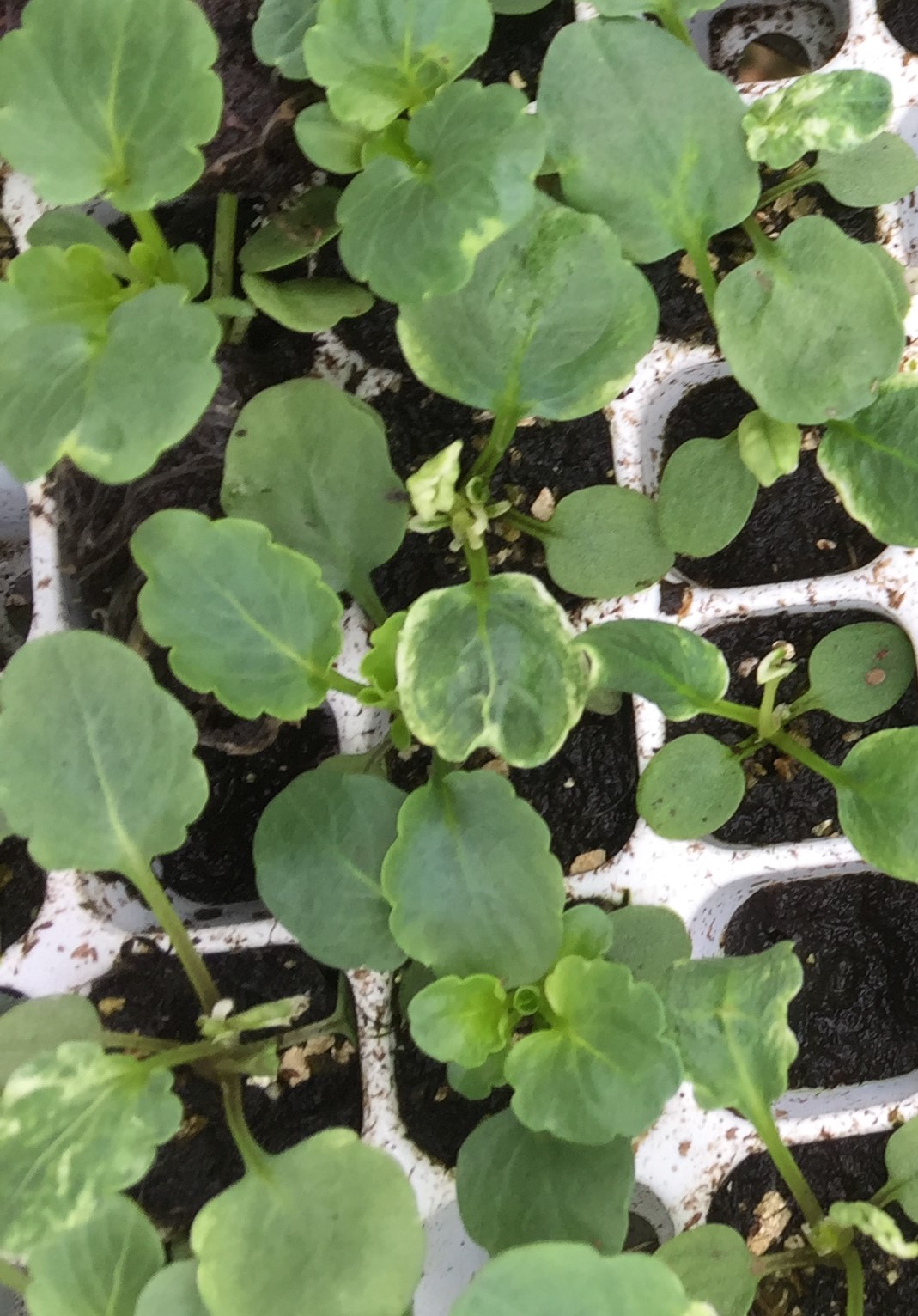
Pansy mottle syndrome (PaMS) is a physiological condition which has been reported since the 1960s. Typical symptoms include leaf distortion, mottling, leaf bleaching, stunting and growing point blindness, and the extent varies from year to year on nurseries. Determination of the cause is complicated by the transient and intermittent nature of the issue, but its incidence has increased in recent years prompting the need for more work to determine the influences on occurrence within the industry.
So far the trigger for this physiological issue has not been firmly established, but over the last few years, AHDB-funded work undertaken by ADAS (PO 016, PO 16a and PO 024) has looked at environmental monitoring to explore whether high temperatures (above 35°C), high vapour pressure deficits (above 4.5) and high light levels may be potential triggers for PaMS symptoms. Multiple plant batches have been monitored from sowing through to marketing over several seasons using data loggers. No definitive link has been found between these factors and the incidence of PaMS. Viola White Distortion-Associated Virus was also investigated to see if it caused the symptoms associated with PaMS, but was found in pansies both with, and without PaMS, so there is no conclusive link there either.
The level of irrigation applied to crops has also been examined and was the subject of two demonstration events staged at Les Halman Nurseries and Newey Roundstone in 2019. A gravimetric method was used to judge when the ‘need to irrigate’ point was reached within the crop. It is key to reach a balance between providing enough water to maintain growth in small plugs, while not overwatering, so plants produce well-developed root systems. The ‘need to irrigate’ point varies depending on plug size, growing media type, plant species and time of year.
Growers are now examining the interaction between growing media and controlled release fertiliser (CRF) nutrition - a high electrical conductivity sometimes results in worse symptoms. Experiments with pushing up the EC using strong liquid feed solutions didn’t result in pansy mottle, so it could possibly be related to the balance of nutrients in CRFs. Symptoms also appear worse in floor-grown plants. These findings will be discussed with the NIAB team currently undertaking nutrient management trials on protected ornamentals as part of project PO BOF 003.
Download the 'Typical symptoms of Pansy Mottle Syndrome' poster